Everyone Knows the Recipe
/ 5 min read
Table of Contents
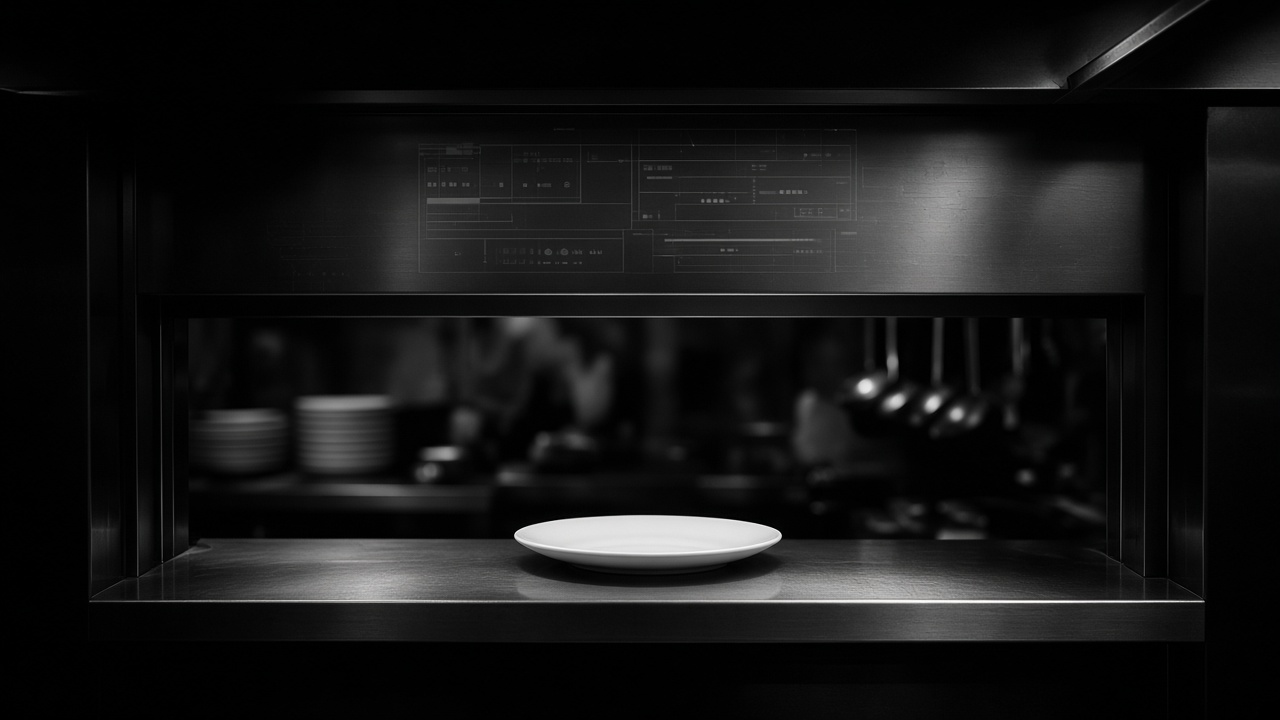 The plate is simple. The kitchen is not.
AI made the software recipe public. Prompt patterns, frameworks, sample repos, weekend demos. Almost anyone can follow the steps at home. Almost no one can run the restaurant.
That gap is the story of this industry right now.
AI democratized the recipe. It did not democratize the restaurant.
Recipe vs restaurant
A recipe is a sequence: model, agent, UI, demo. Useful. Copyable. Not a moat.
A restaurant is customers, pricing, support, hiring, cash discipline, distribution, and reliability under load. Friends will praise one nice plate. Rent gets paid when you survive Tuesday dinner service.
If your strategy is “same model, same agent loop,” you are competing on a cookbook page. Differentiation lives where tutorials stop: domain judgment, distribution, compounding context, and the habit of shipping under real constraints.
Ideas are cheap. Operating systems of work are not.
Home kitchen vs dinner service
You can remake the dish at home. The professional edge shows when tickets pile up, something fails mid-service, and 7pm quality must match 5pm.
That edge is unglamorous: mise en place, station timing, recovery, batching, and the decisions no recipe lists. In product engineering it looks like agent settings, evals, permissions, CI, cost control, incident response, and context that keeps the model from inventing a second architecture.
Treat AI as a demo oven and you will rediscover this in production.
Before every agent run, prep still wins: clear acceptance checks, hard architecture boundaries, least-privilege tools, and verification that does not depend on “the chat looked good.” Skip it once and you feel fast. Skip it for a week and you serve leftovers.
Taste and food safety
Generation raised the volume of plausible output. It did not raise taste.
Taste is knowing thin design, theater tests, and demo-complete work that cannot be operated. Design review and verification are the tasting spoons. Without them, abundance only plates mistakes faster.
Models propose. Leaders decide what leaves the pass.
Food safety is the same category. Clever sauce does not survive a hygiene failure. Security, privacy, permissions, auditability, and data handling belong on the line before you celebrate ticket speed. After an incident, nobody cares how fast you cooked.
Distribution still matters too. A perfect closed kitchen fails without a dining room: onboarding, trust, support, brand. Copying a competitor’s menu without their reservation book is not strategy. And one great chef is not a restaurant; AI leverage without review habits, shared context, and ownership after the chat closes just moves the fire to another station.
Trends fill menus with the same specials. Durable products keep a signature: domain depth, distribution, proprietary evals, a workflow customers already trust. “We use AI” is not a signature dish.
The meal ends. The data often does not.
Software feels consumable: use it, done, leave. Unlike a dish, it keeps a thick residue: personal data, usage history, preferences, files, chat logs, agent memory.
Portability is the real question. Can the customer take that history to another table?
Export for humans is not import for competitors. Model memory often stays vendor-shaped. Delete and migrate are different products. Lock-in used to be file formats. Increasingly it is accumulated context that is expensive to rebuild.
Retention built on hostage data is not loyalty. It is deferred churn.
Build a dish people return for, or build exit costs. One compounds trust. The other compounds until regulation or a better export forces the issue.
Quiet dining rooms, ghost kitchens
Schools are pulling screens back: phone bans, devices on carts, more paper, more teacher-led work. The surface is moving toward minimum technology.
At the same time, AI agents are becoming the primary interface.
Those two trends fit. Strip gadgets from the tables and guests still meet a waiter. They never tour the industrial oven. Visible software shrinks. Capability moves behind the wall. Kids may grow up meeting a conversation and a result, not folders and settings panels.
Mini UI is the product form of that shift: a ghost kitchen.
No dining room. No storefront. Orders arrive through a delivery platform; food leaves in a bag. The customer meets the agent, not your floor plan. Your product becomes tools and APIs the agent can call.
The upside is focus: stop funding empty UI, optimize the dish and the contract. The trap is dependency: the platform owns the relationship, your brand thins to a line item, and interchangeable kitchens get delivery-app margins.
Minimum interface is not minimum technology. It is a ghost kitchen. The agent takes the order. You cook out of sight.
If agents are the only interface, literacy becomes the constraint. Someone still has to teach the next generation what the kitchen can do, what it must not do, and how to reject a bad plate. Remove screens without teaching agent judgment and you trade distraction for opaque dependence.
Winning then looks different. Another home-screen icon is optional. Being the waiter people trust, or the kitchen an agent prefers and cannot silently replace, is the job.
Operating questions
- What must be true before we generate?
- Where do we stay efficient under real load?
- Who tastes before ship?
- What remains hard after the demo works?
- What is our signature when the special is public?
- When users leave, what data stays, and can they take it?
- In a ghost-kitchen market, are we the waiter, a preferred kitchen, or a replaceable SKU?
Cookbooks did not end cooking. They clarified what was scarce. Software is in the same moment: recipes public, demos easy, dinner service still hard.