On Entrepreneurs and Professional Managers
/ 4 min read
This started as a reply on Twitter to @Deduce:
I think professional managers and entrepreneurs have a lot in common. They just prefer different ways of living.
That is a bit hasty. The similarities and differences between professional managers and entrepreneurs have been argued in plenty of places.
So where do the two actually differ?
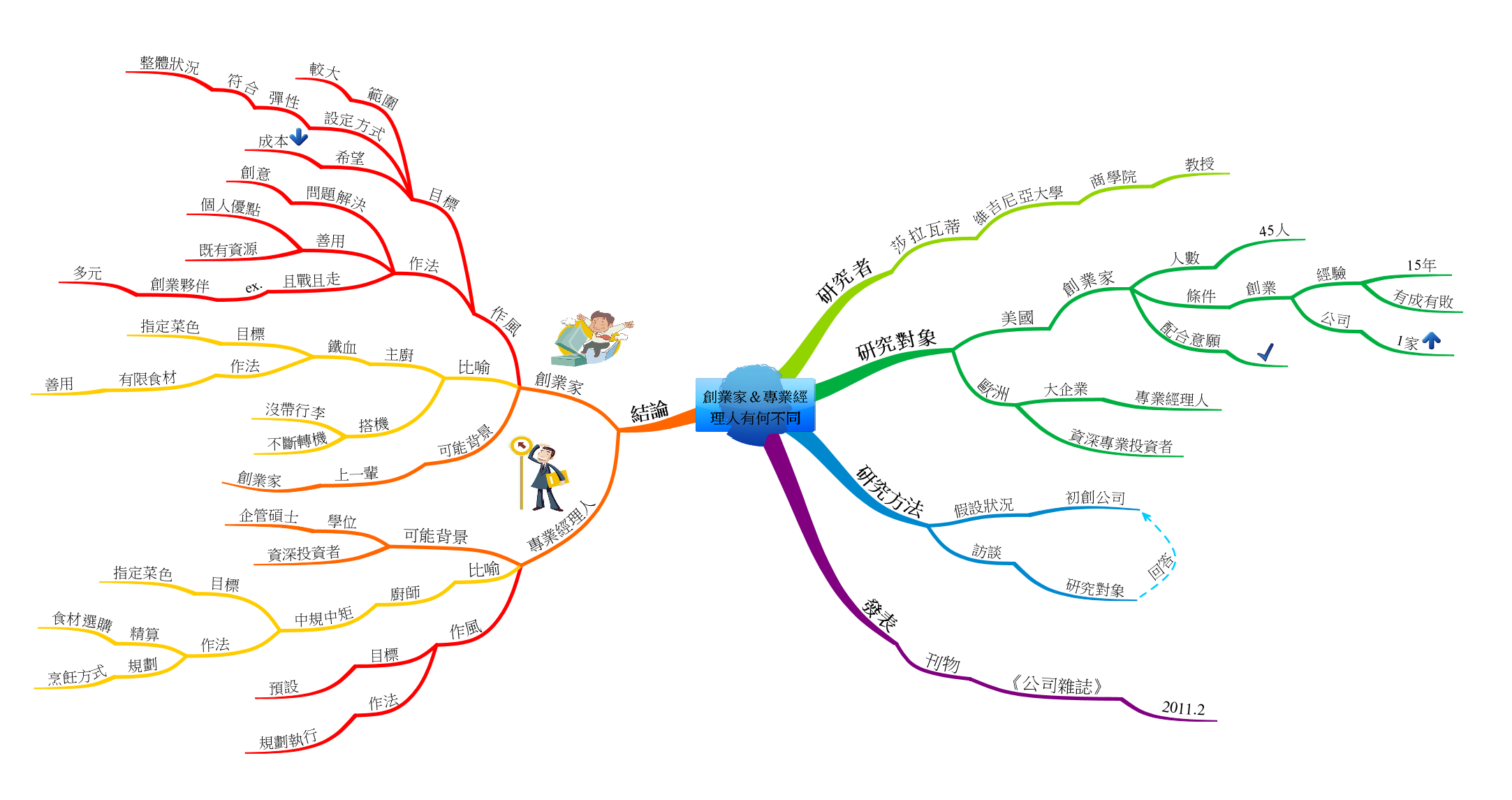
The mind map below comes from the Sun Yi-hsin mind mapping site, summarizing EMBA Magazine issue 295, “How Are Entrepreneurs and Professional Managers Different?”.
At lunch I asked coworkers what they thought.
TonyQ: the words are different. (Immediately thrown out of the conversation.)
Ian thinks the driver is different. A professional manager is driven by metrics (stock price, efficiency, revenue). An entrepreneur is driven by a goal (a better todo list, a cloud notebook, social interaction). In short: different motivation.
The two also carry very different reputations today.
- Professional manager: generally seen as someone who uses the resources on hand to maximize returns
- Entrepreneur: generally seen as someone chasing a large dream into existence
On the execution side, the overlap is huge. Plenty of people go from professional manager to entrepreneur, and from entrepreneur to CEO. Both management research and startup circles have spent a lot of time on the comparison.
Years ago a BBS post made the rounds titled “Born to Be the Boss” (I could not find the original on Google just now — only reposts and fragments).
A large share of the entrepreneurial traits it lists are the same traits a professional manager needs. The biggest innate gap it calls out is tolerance for the unpredictable and the uncertain. In short, tolerance for risk.
Picture two climbers starting from different trailheads, wearing similar gear. Both have the stubbornness to keep going through wind and rain. They do not handle every surprise the same way.
Does an entrepreneur need a professional manager’s way of thinking?
A lot of large companies (IBM, Manpower) have a system that spins a mature product group or technical team out as a branch. That branch runs its own books — spending and revenue — and owns the result. It produces leaders who can do a bit of everything. When those people leave and start companies, they often build something of their own.
Digging through old notes in Evernote, I found “Do Professional Managers Love Money More Than Entrepreneur-Owners?”. It looks at the role non-monetary motives play in entering and exiting a market. The piece offers a few hypotheses for anyone trying to read a company:
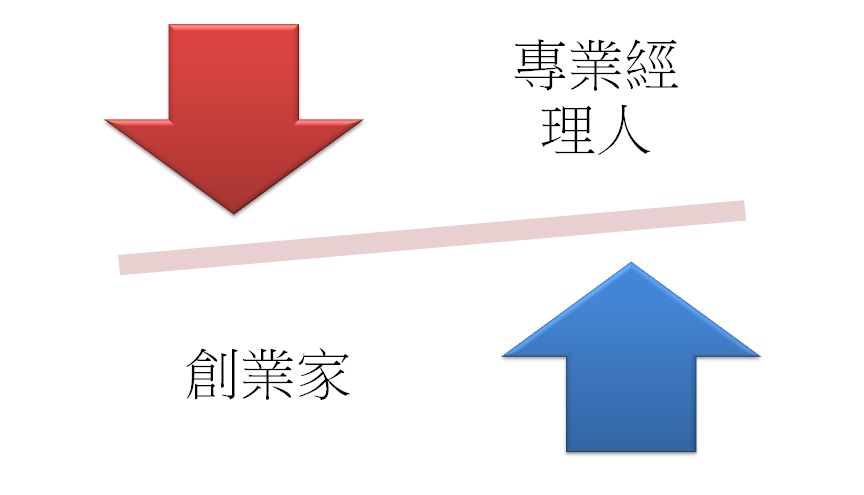
Three of them:
- In a company run by professional managers, “market attractiveness” and “likelihood of entering” are more likely to be positively correlated than in a company run by its owners.
- A company controlled by professional managers is more likely than one where the owner is also the manager to raise its chance of exiting as the economic incentive shrinks.
- In a company run by professional managers, the positive relationship between “market attractiveness” and “company price” is stronger than in a company run by its owners.
In a hot industry (plainly: where the market’s money is piling up), very few companies are run by so-called professional managers. Set aside outside help such as mentors. If you are building a software company, learning by doing is not enough. You also have to hunt down how professional managers think and manage. The usual entry points are marketing, project management, and people management. Otherwise, even with a large raise or a solid business model, the current can still take you under.
Start a company, or become a professional manager?
With Diablo 3 about to ship, this Diablo 2 skill tree is the most reasonable explanation I have:

There is no perfect career path. Play what you want to play. If the current setup cannot satisfy you, or life feels dull, you need a change. The entrepreneurial traits above, and the 10D framework from National Sun Yat-sen University creativity-management professor Liu Chang-yong, are useful reference points.
Stacking your own value (putting points into skills) is rarely a bad idea. The part everyone has to think through is how to spend those skills at the right time, inside limited resources such as time.